.png)
Optimizing Gen5 Storage Performance for Your Gen5 Computing Platform
In order to ensure your PCIe Gen5 NVMe storage performs optimally you will need to make sure the host platform is configured properly, and that you are properly testing the storage configuration.
This blog will examine 3 critical factors associated with PCIe Gen5 NVMe Storage:
1) Memory (system RAM)
2) System/Mainboard BIOS Settings
3) Benchmark Utility Settings/Test Scripts
These are of key importance, and apply to desktops, workstation and server platforms. However, but specific chipsets and motherboard combinations may have unique requirements.
System Memory
PCIe Gen5 storage media benefits from high-performance memory (system RAM). As a general rule, you will want to install as much memory as your budget allows for.
The type of memory used, and how this memory is configured varied from system to system. We recommend consulting the motherboard/platform user guide for a list of supported memory-modules.
Selecting the right type of memory can have a major impact on system performance. Dual-channel memory for example, is recommended for workstations or platforms with single CPUs, as it can optimize available bandwidth and transfer speed. (two modules installed into two memory lanes) can optimize bandwidth and improve transfer speeds.
In addition, some systems may provide various BIOS settings associated with system memory.
Motherboard BIOS Settings
Although PCIe Gen5 NVMe media is now widely available, it is not yet considered mainstream, as its most commonly used for specialized professional applications rather than those associated with consumers or SMBs. As a result, most Gen5 computing platforms are often paired with PCIe Gen4 NVMe media by default, and their BIOS configurations will reflect this.
When prepping a system for Gen5 storage media, it’s important to check the platform’s BIOS configuration menu to ensure Gen5 related settings are enabled and optimized. As the ideal configuration varies from system to system, be sure to consult your platform/motherboard’s user guide. PCIe Gen5 connectivity may be limited to specific slots, or even certain types of PCIe devices.
Some general settings are outlined below:
Memory Related Settings: As touched upon earlier, several memory settings may be provided by the system’s BIOS Configuration Menu:
NUMA (non-uniform memory access): This setting may also be presented along the line of “NUMA nodes per socket”. Although this setting can affect performance for any platform, the default NUMA settings for some motherboards may not be ideal for NVMe storage configurations. If the option is present, you may need to manually set the system to operate in NPS4 mode.
Memory Frequency: Memory frequency settings can have a big impact on performance. 5600 Hz is recommended for Desktops while 4800Hz is ideal for Server and Workstations.
Other Settings
PCIe MPS (Max Payload Size) can affects sequential performance. As a general rule, lowering the Max Payload Size improves compatibility with PCIe devices, but may result in performance loss. In most cases, it can be left in the default configuration, but using the maximum of 4096 is recommended for modern PCIe devices. If 4096 is not the system’s default setting, you want to consider checking the system/motherboard user guide for recommendations.
VT-d: VT-d (short for "virtualization for technology direct I/O access") is associated with some Intel-based server and workstation motherboards. Though its primary purpose is for virtualization platforms (it enables direct access to the host hardware from a virtual machine), it can have an adverse effect on transfer performance in some instances. If you are experiencing sub-par performance, try disabling the VT-d setting.
Power Management: While often overlooked, Power Management related BIOS settings can have a big impact on performance, especially if the system has been configured to operate in a “Green” Power Savings mode. In fact, many systems are now shipped with these modes enabled.
If your platform’s BIOS menu provides Power Management settings, make sure to prioritize system performance over efficiency.
Optimize Queue Depth and Thread Count for Accurate NVMe Benchmark Performance
Performance Benchmarks such as CrystalDiskMark (CDM) can be used to test storage media by simulating a wide range of workloads. However, such utilities may not be configured to test NVMe storage devices by default. In many cases, adjustments are required.
The most common are Queue Depth and Thread Count.
Queue Depth: By and large, NVMe storage media has been designed to execute a huge number of concurrent tasks, especially when compared to SAS/SATA SSDs or hard disks. The Queue depth of and NVMe SSD (the number of I/O requests a device can handle at one time) is measured in the tens of thousands, as opposed to tens or hundreds for a SAS or SATA drive.
As a general rule, increasing queue depth will result in higher performance, as the test will be simulating denser workloads associated with NVMe storage applications.

Real-World Applications:
Thread Count: As PCIe-devices, NVMe’s multi-threaded architecture was designed to work in conjunction with modern multi-core CPUs, enabling parallel I/O processing across multiple threads (A.K.A tasks or jobs).
This approach eliminates bottlenecks inherent in single-threaded protocols like SATA, ensuring benchmarks reflect the true capabilities of NVMe storage.
Properly configuring the number of threads (often represented as “workers” or “jobs”) is essential to unlock accurate performance measurements for NVMe storage.
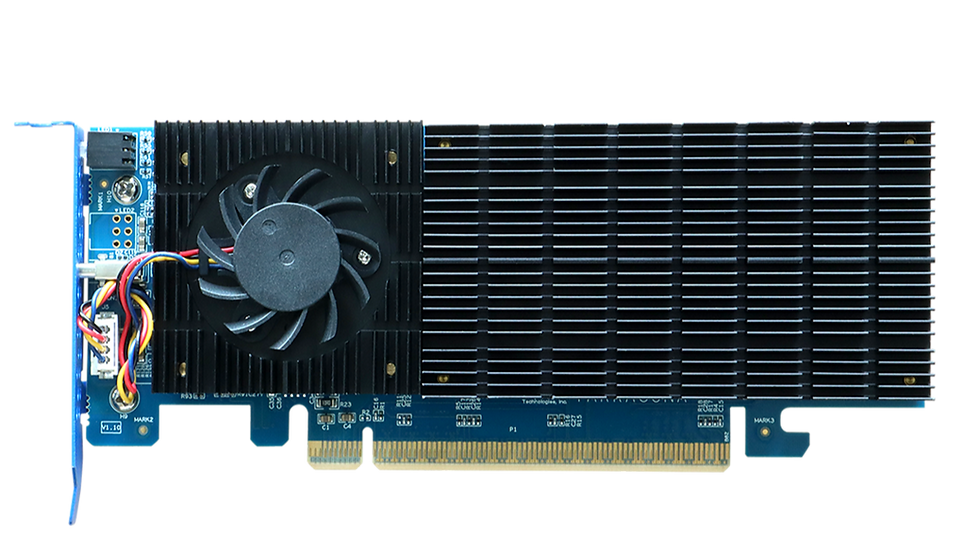
HighPoint publishes benchmark reports and guidelines for their various NVMe products, including Rocket7600 and 1600 series Gen5 AICs and Adapters. Contact us for more information
HighPoint publishes various test scripts and setting recommendations for tested NVMe media with various benchmarking tools including FIO (Flexible I/O Tester), Iometer, and CDM.
For more information and sample scripts, please contact our Support Department
Learn More

The way your fall lineup pairs cozy hoodies with phone cases for Samsung and Apple devices feels like a practical take on seasonal style, especially with the note about Google cases coming later. When I need a quick break from sorting autumn plans or class projects, ソリティア無料ゲーム is the kind of simple distraction that helps me reset. The personalization angle also stuck with me, since turning a sticker or case idea into a gift feels more thoughtful than buying something generic.
The part about BIOS defaults still being set for Gen4 is a real gotcha. I checked the over the hill wiki to confirm my board limits Gen5 to one slot, which explains a lot. Setting NPS4 also made a bigger difference than I expected.
This is a helpful overview of how system memory can influence the performance of PCIe Gen5 storage. Choosing compatible RAM and checking the motherboard's specifications are important steps when building or upgrading a workstation. The explanation of dual-channel memory is especially useful because it highlights how proper configuration can improve bandwidth and data transfer speeds. It is also worth exploring BIOS settings carefully to ensure the system runs efficiently and reliably. Articles like this make technical topics easier to understand for both beginners and experienced users. For those who enjoy exchanging knowledge and meeting people with different interests, omezy offers another way to connect.
The part about being considered Sui Generis because the community plans to manage and govern the whole site itself feels like the key point in the Nationally Described Space Standards discussion. It’s a useful reminder that a concept can be misunderstood when viewed through a familiar frame, the way car circle could be mistaken for a standard category rather than its own thing. I’m curious how the affordable housing fund application and the Design Circle’s chosen internal layouts will reflect those design principles.
The argument that stabilization analysis defaults to monetary policy as the only instrument, partly because fiscal policy took most of the blame from the 1970s onward, explains why coordination debates often end up feeling one-sided. Shougaijam's link between SDG 17 and the need for closer alignment between central banks and finance ministries is the part I keep returning to, since the costs of failed coordination land on employment and inflation rather than on the institutions themselves. I happened to have an evil nun game open in another tab while reading, and the contrast between careful countercyclical design and pure jump-scare economics was hard to miss.